Multifamily & HOA Roofing: How A Real Project Actually Runs
The process, the impact on tenants, and the systems we install on apartment complexes, condos, and townhomes
What You'll Learn
- What a Property Condition Assessment (PCA) is and the formats we offer
- How board and owner approval is packaged and phased
- How we minimize disruption for occupied units
- Lifespan ranges and maintenance plans for multifamily systems
Multifamily Is Different — On Purpose
Replacing or repairing the roof on an apartment complex, condo association, or townhome development is not just "a bigger residential job." It is a different discipline, with multiple stakeholders, occupied units, strict board approvals, and tighter schedules. We have run hundreds of multifamily projects across the Front Range, and the steps below are what consistently makes them go well.
Step 1 — The Property Condition Assessment (PCA)
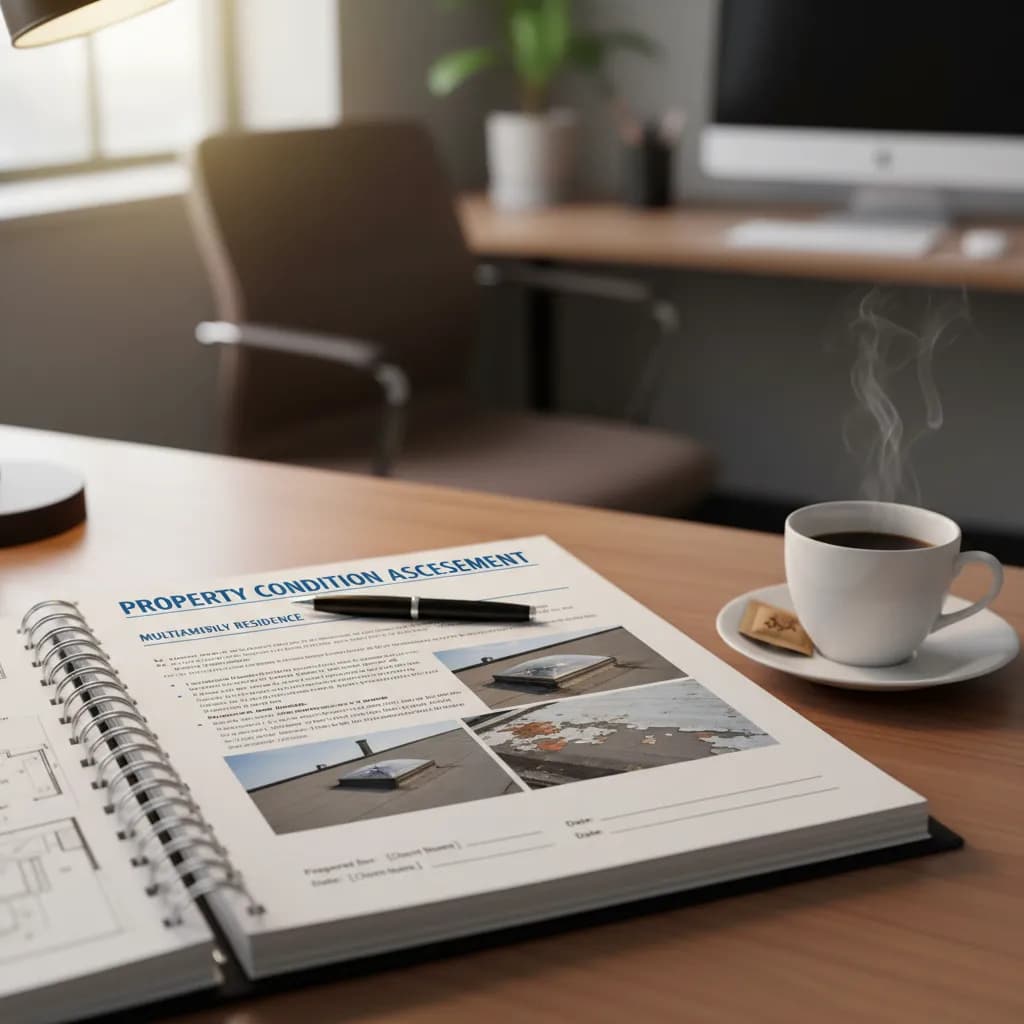
A PCA is a professional inspection of your property. It identifies what shape the roof is in and what kind of work, if any, should be done. PCAs are invaluable for multifamily owners (especially after storms pass through).
We deliver PCAs in a few different formats depending on the situation:
- T&M with a Not-To-Exceed dollar amount — fastest path when something needs to be fixed now
- Estimate With Pictures — a Project Manager evaluates and submits an estimate with supporting photos
- Photobook Estimate — a fuller "photo only" report with images keyed to each line item, doubles as a visual scope of work and "before" photos
- PCA For Due Diligence / Acquisition — line-item report with recommendations for immediate and future capital work
Optional add-ons:
- 4K drone inspections for high-def imagery and video documentation
- Storm event monitoring — your property is registered into 24/7/365 storm tracking, with immediate drone follow-up after severe weather
Step 2 — Board / Owner Approval
Boards have to approve scope, materials, and budget. We package our documentation specifically for that — line items, manufacturer specs, warranty options, and a clear schedule. We will attend a board meeting if it helps move a decision along.
For larger associations, we can also break the scope into phases by building cluster so the board can fund the project across multiple fiscal years if needed.
Step 3 — Phased Installation With Minimum Tenant Impact
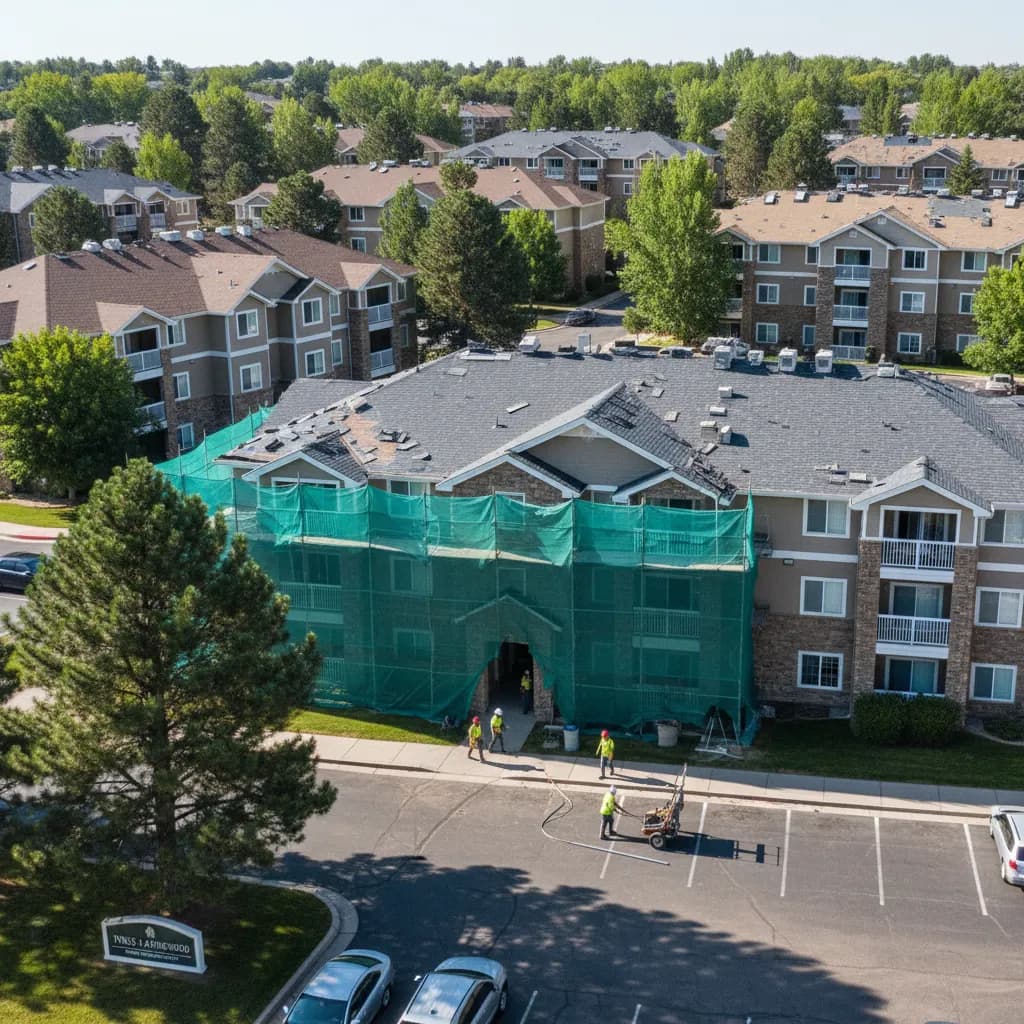
As opposed to new commercial construction, when folks are living in the building these projects definitely have an impact. Our teams use every trick and trade secret in the book to minimize that impact. You'll know what we are doing and why, building by building, day by day.
Typical good practices on a multifamily project:
- Phased buildings (rather than the whole complex at once)
- Posted daily schedules so residents know which units are above the work
- Coordinated parking and access
- Tight daily cleanup so the property stays presentable
- Magnetic nail sweeps in walkways and parking areas
- A site supervisor and a single point-of-contact for the property manager
Common Material Choices For Multifamily
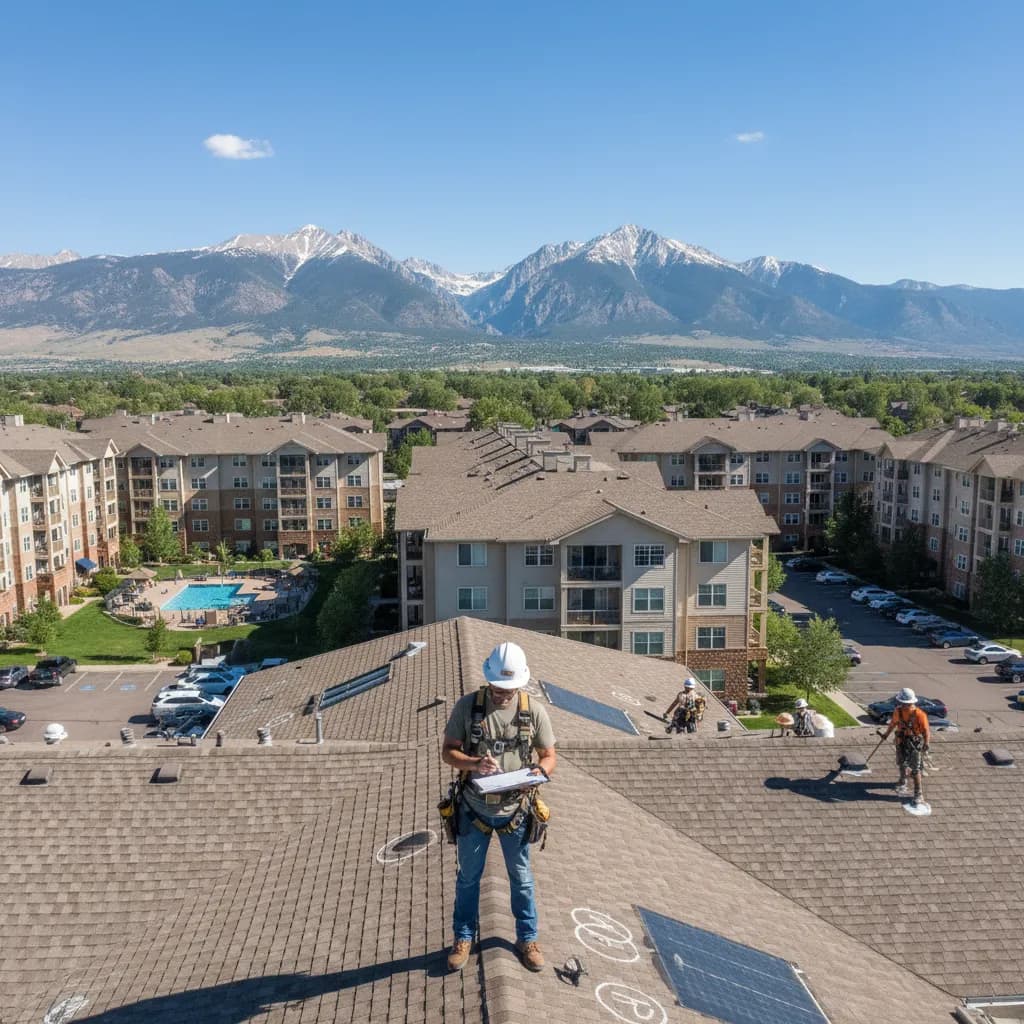
We install across the full multifamily stack: steep-slope or flat, shingle, metal, tile, shake, slate, composite, or stone-coated. The most common shingle choice on our Front Range multifamily projects is GAF Timberline HDZ in Charcoal, Shakewood, or Mission Brown.
General lifespan ranges for multifamily systems:
- Spray Polyurethane Foam: 30–50 years
- Single-Ply TPO: 15–20 years
- Single-Ply EPDM: 20–25 years
- Metal: 30–45 years
After The Roof Is Done — Maintenance
With Roof Worx, you do not need to worry about maintenance. We handle inspections throughout the years to keep the roof in tip-top shape. That includes checking after storms, cleaning, unclogging gutters and drainage systems, pruning nearby trees, and so on.
We recommend gutter cleanings at a minimum of twice a year for multifamily buildings — more often if there is heavy tree cover — to keep water moving smoothly off the roof and away from the building envelope.
A Quick Word On Warranties
Are warranties worth it on multifamily? Absolutely. But not everyone needs the same level of coverage. We will walk a board through what is appropriate for your asset class, your hold period, and your capital plan — and write the scope accordingly.
Frequently Asked Questions
Can the project be phased across multiple fiscal years?
Yes. For larger associations, we routinely break scope into building clusters or wings so the board can fund the project across two or three budget cycles. Each phase is a complete, warrantable installation — not a partial job that has to be 'finished' later.
How much disruption will residents actually experience?
Less than they expect, but more than zero. Each building is typically active for one to three days of tear-off and install. We post daily schedules at each building so residents know what is happening above them, and we coordinate parking and access with the property management team in advance.
Do you carry insurance suitable for multifamily projects?
Yes. We carry general liability and workers' comp at limits appropriate for multifamily and commercial work, and we will name your association or ownership entity as additional insured on the certificate before mobilization.
What happens if a tenant reports a leak after the install?
Call us. Workmanship issues on a Roof Worx multifamily install are covered under our workmanship warranty, and we respond on a documented timeline. Most leaks reported in the first year trace back to flashing, ventilation, or a penetration we can address quickly.
Do you handle ongoing maintenance contracts?
Yes. We offer scheduled maintenance programs that include twice-yearly inspections, gutter cleanings, and post-storm checks. This is the single biggest lever associations have to protect a capital-investment-grade roof asset over its lifespan.