Commercial Roofing Systems: TPO, EPDM, PVC, Modified Bitumen & Metal
How long each commercial system lasts, where each one fits, and what we install most often on Front Range buildings
What You'll Learn
- Lifespan ranges for TPO, EPDM, PVC, modified bitumen, and metal
- Which commercial system fits which building
- What maintenance each membrane needs to stay under warranty
- How we decide between overlay and full tear-off
We Install Across The Whole Commercial Stack
For commercial roofing, we are not loyal to one material — we are loyal to whichever system actually fits the building. Here is what we install most often on the Colorado Front Range, what each one does well, and how long it tends to last.
TPO (Thermoplastic Polyolefin)
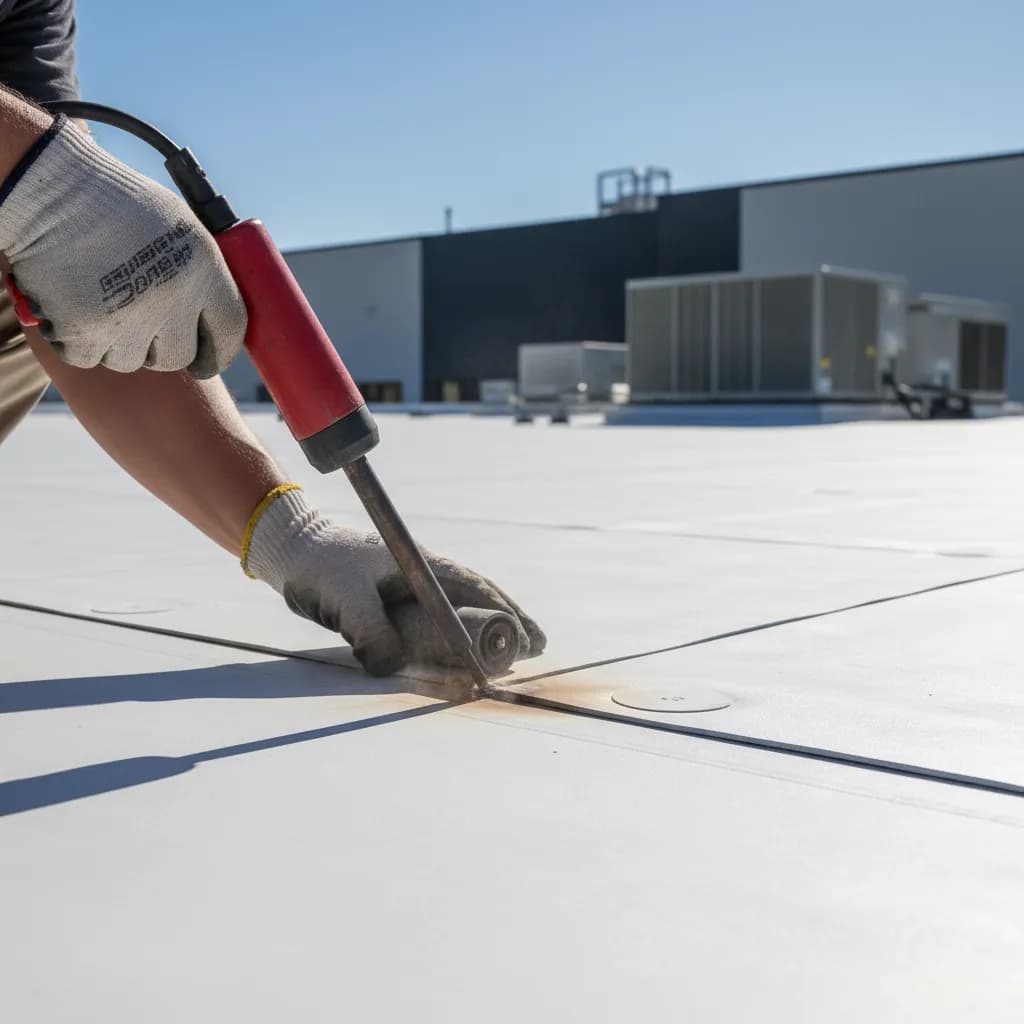
TPO is a single-ply membrane that is often ideal for flat or low-pitch commercial roofs. Reflective light-colored membranes can also boost energy efficiency.
- Typical lifespan in Colorado: 10–30 years (huge spread driven by product grade)
- Best for: Flat / low-slope commercial roofs that want a reflective "cool roof" surface
- Maintenance: Low. Annual cleaning at minimum. We recommend two professional inspections a year — one in early spring and one in early fall — plus inspections after severe weather and any rooftop HVAC work.
Watch for ponding water, debris buildup, discoloration, punctures, and ruptured seams — those are the signals it is time to call us.
EPDM (Synthetic Rubber)
EPDM is a synthetic rubber roofing membrane made primarily from ethylene and propylene. It is available in widths from 5 feet to 50 feet, in 45 or 60 mil thicknesses, in white or black, and can be installed three different ways:
- Mechanically Fastened — lightweight; secured to the deck with plates or batten strips
- Ballasted — accounts for ~35% of EPDM installations; large panels (up to 50' x 200') laid down and weighted, covers ground quickly
- Fully Adhered — bonded with adhesive; most popular method nationally; works even on higher-slope applications
Typical lifespan: 20–30 years. Annual seam and flashing checks are the main maintenance need.
PVC (Polyvinyl Chloride)
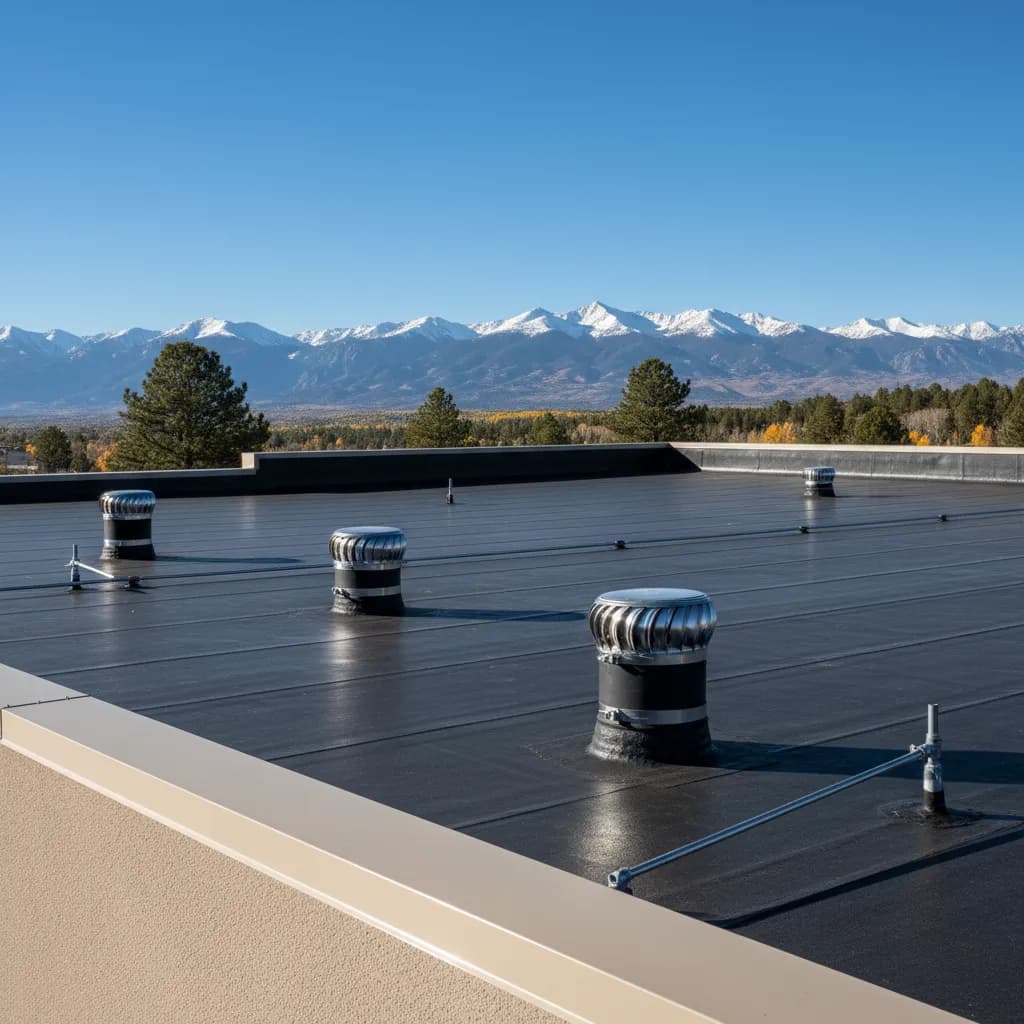
Well-installed PVC roofs last 20–30 years when properly maintained. PVC is fire resistant, naturally reflective (so it helps air conditioning load), and the welded seams produce a very durable waterproof bond. Good fit for multifamily and commercial properties with flat roofs and rooftop equipment.
We carry Durolast PVC certification for high-performance single-ply membrane installs, including custom prefabricated panels that dramatically cut field seams.
Modified Bitumen
The average lifespan of a modified bitumen system is 15–20 years. Premium polymers (SBS) add elasticity, which helps the membrane flex during freeze-thaw cycles without cracking — a real advantage in Colorado's winter swings. We install both torch-down and cold-applied systems depending on the building, the surrounding occupancy, and any open-flame restrictions.
Standing Seam Metal
For commercial buildings that want 30–45+ year lifespan and the cleanest look possible, standing seam metal is hard to beat. We pair our metal installations with Drexel and Firestone weather-tight warranties, which cover both materials and workmanship defects.
How We Pick
The right system for your building depends on:
- Slope and drainage
- Foot traffic and rooftop equipment
- Existing roof condition (overlay vs. tear-off)
- Energy / reflectivity goals
- Warranty length you want to lock in
- Budget — including how you want to split it across this year vs. five years from now
We will walk through every one of these with you before recommending a system. The wrong commercial roof is a very expensive mistake — and we are not interested in selling you one.
Frequently Asked Questions
How often should I have my commercial roof inspected?
Twice a year at minimum — once in early spring and once in early fall — plus after any major storm event or rooftop HVAC work. Most warranty programs require documented inspections to remain valid.
Can a commercial roof be installed over an existing system?
Sometimes, yes. Overlay installations save tear-off cost and disposal fees but only work when the existing membrane is dry, well-adhered, and structurally sound, and only when local code allows it. We inspect and core the existing roof before recommending overlay vs. full tear-off.
What is the most cost-effective commercial roof?
For most Front Range commercial buildings, a well-installed TPO or EPDM single-ply system is the most cost-effective on a dollars-per-year-of-life basis. The 'cheapest' system installed poorly is usually the most expensive over a 15-year horizon.
Will my commercial roof qualify for a manufacturer warranty?
Yes, as long as it is installed by a manufacturer-certified contractor on the systems we are credentialed for — GAF Master, Mulehide, Versico, Firestone Metal, and Durolast PVC. Warranty length depends on system grade, accessory specification, and inspection cadence.
How do I know when it is time to replace vs. repair?
If we are patching the same areas repeatedly, if seams are failing across more than 20% of the roof, or if the substrate is wet under the membrane, you are usually past the point where repair is the right economic call. We will core the roof and give you a straight answer.